What Is an AI Clone and How Do Businesses Use Them for Content?
Modern AI technology allows businesses to create digital replicas of individuals, transforming content creation and communication strategies for greater efficiency and reach.
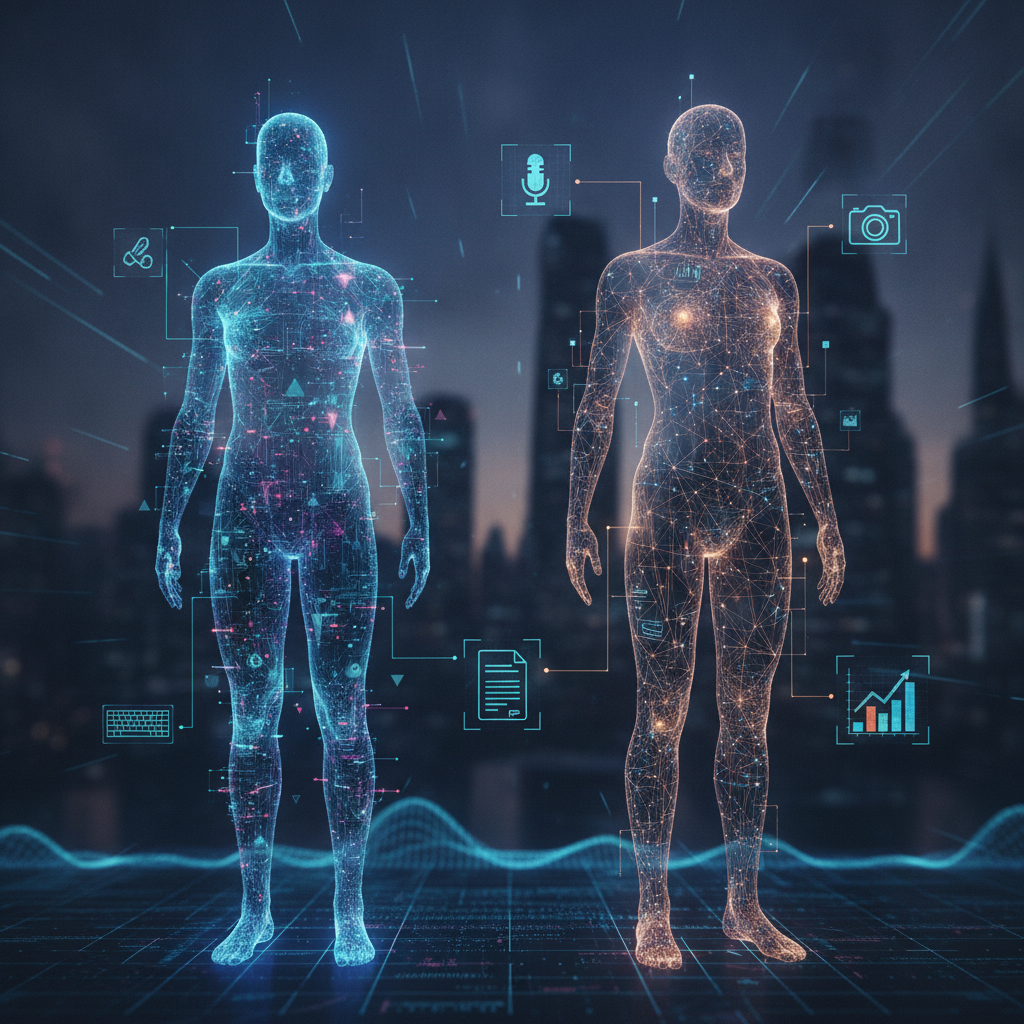
Table of Contents
- What Exactly Is an AI Clone?
- Types of AI Clones
- How AI Clones Are Created
- AI Clones vs. Related Technologies
- Key Business Benefits of Using AI Clones for Content
- Practical Applications: How Businesses Use AI Clones for Content
- Getting Started: Implementing AI Clones for Your Content Strategy
- Challenges and Ethical Considerations of AI Clones
- Tips for Success with AI Clones in Content Creation
- The Future of Content with AI Clones
- Frequently asked questions
Imagine being able to produce a personalized video message for every single customer, record a podcast episode in your voice even when you’re on vacation, or write dozens of blog posts that perfectly match your brand’s unique tone and style, all without adding hours to your workday. This isn't science fiction anymore. It’s the practical application of AI clone technology, and businesses are already using it to revolutionize their content strategies.
An AI clone is a digital replica of a person's voice, appearance, or writing style, created using artificial intelligence, primarily used by businesses to scale personalized content creation, enhance customer interaction, and maintain brand consistency without the constant presence of the original individual.
For small and medium businesses especially, AI clones offer a powerful way to compete with larger enterprises by extending their reach and maintaining a strong, consistent brand presence across all digital channels. Let's explore what AI clones are, how they work, and the specific ways your business can leverage them for content creation.
What Exactly Is an AI Clone?
At its core, an AI clone is an artificial intelligence model trained to emulate specific attributes of a human being. Unlike general AI models that generate generic content, an AI clone is designed to mimic a particular individual's unique characteristics. This could involve replicating their speaking patterns, facial expressions, vocal tone, or even their distinct writing style and personality.
The goal is not to create a fully sentient being, but a highly sophisticated digital tool that can perform specific tasks in a way that feels authentically human. Think of it as creating a digital avatar or assistant that embodies a known persona, making your brand communication more consistent and scalable.
Types of AI Clones
AI clones manifest in several forms, each designed to replicate a different aspect of human communication:
- Voice Clones: These AI models are trained on extensive audio recordings of a person's voice. Once trained, they can generate new speech in that individual's exact voice, intonation, and rhythm. For example, a business owner could record a few hours of their voice, and the AI could then narrate thousands of product descriptions, podcasts, or instructional videos in their voice without them having to utter another word.
- Visual Clones (Digital Avatars): This involves replicating a person's appearance and mannerisms. Trained on video footage, these AI models can generate realistic digital versions of individuals that can speak, move, and express emotions. These 'digital humans' can be used to present videos, host virtual events, or even interact with customers in real-time.
- Text and Personality Clones: These AI models learn a person's writing style, vocabulary, sentence structure, and even their unique personality traits from a corpus of their written work. The AI can then produce new text content, such as blog posts, social media updates, or email newsletters, that sounds as if it was written by the original individual. This is particularly valuable for maintaining a consistent brand voice across all written communications.
How AI Clones Are Created
The creation of an AI clone is a data-intensive process that relies on advanced machine learning techniques:
- Data Collection: The first step involves gathering a significant amount of data from the person to be cloned. For a voice clone, this means hours of recorded speech. For a visual clone, it requires extensive video footage from various angles and expressions. For a text clone, it necessitates a large body of written work, articles, emails, social media posts, that showcases their unique style.
- Model Training: This collected data is then fed into a specialized AI model. Neural networks are commonly used to identify patterns, nuances, and stylistic elements within the data. The AI learns to associate specific inputs (like text for a voice clone, or a script for a visual clone) with the desired output that mimics the original person.
- Refinement and Iteration: The initial clone might not be perfect. The process often involves several rounds of refinement, where the output is reviewed, compared against the original, and the model is fine-tuned to improve accuracy and naturalness. This iterative process helps reduce any artificial-sounding elements or unnatural movements.
AI Clones vs. Related Technologies
The AI landscape is rich with innovative tools, and it's easy to confuse AI clones with other powerful technologies. Understanding the distinctions helps clarify their unique value proposition.
What is an AI Agent?
An AI agent is an autonomous system designed to perform specific tasks or sets of tasks, often interacting with users or other systems. Examples include AI receptionists that answer calls and schedule appointments, chatbots for customer service, or AI assistants that manage leads. While an AI agent can incorporate an AI clone's voice or textual style, its primary function is action-oriented and often involves decision-making based on predefined rules or learned patterns. An AI clone primarily focuses on replicating a persona, whereas an AI agent is about performing a job. For instance, an AI agent might capture after-hours leads, and that agent could potentially use an AI-cloned voice to sound like a specific human representative. To learn more about how AI agents capture opportunities, read our article Don't Miss Another Opportunity: How AI Agents Capture After-Hours Leads.
What is General AI Content Generation?
General AI content generation refers to AI models, like large language models (LLMs) such as ChatGPT, that can create text, images, or other media based on prompts or general information. These tools are powerful for generating ideas, drafting content, or summarizing information. The key difference is that general AI content generation doesn't inherently replicate a specific individual's style or persona. It aims for coherence, relevance, and often originality based on its training data. An AI clone, conversely, takes that general generation capability and filters it through a specific, learned individual style, ensuring brand consistency and personalization.
Key Business Benefits of Using AI Clones for Content
For businesses, especially small and medium-sized ones, AI clones offer transformative advantages for content creation and distribution.
Scalability and Efficiency
One of the most significant benefits is the ability to scale content production without proportionally increasing human effort. Instead of needing a person to record every video, write every email, or narrate every audio clip, an AI clone can produce this content on demand, 24/7. This frees up valuable human resources for strategic tasks, creative oversight, and direct customer engagement where a human touch is essential.
Pro tip: Consider using AI clones for high-volume, repetitive content needs, such as answering common customer questions in video format or generating personalized email snippets, to maximize efficiency gains.
Consistency and Brand Voice
Maintaining a consistent brand voice, tone, and visual identity across all content channels is crucial for brand recognition and trust. An AI clone, once trained on a specific persona, can ensure this consistency flawlessly. Whether it's a social media caption, a blog post, or a video explainer, the AI clone will adhere to the established style, reinforcing your brand's personality in every interaction.
Personalization at Scale
True personalization often requires significant time and resources. AI clones enable businesses to deliver highly personalized content to individual customers or segments at a scale that was previously impossible. Imagine an AI clone of your sales representative sending thousands of personalized video messages to prospects, each addressing them by name and referencing specific interests, all generated from a single template.
Cost-Effectiveness
While there is an initial investment in training an AI clone, the long-term cost savings can be substantial. Reducing the need for continuous studio time, voice actors, video editors, or extensive writing staff for repetitive content can significantly lower operational expenses over time. It allows small businesses to produce high-quality, professional content without a large in-house team, helping them to scale without constantly hiring.
Faster Content Production
The speed at which AI clones can generate content is a game-changer. What might take hours or days for a human to produce can be created in minutes by an AI clone. This rapid production capability allows businesses to react quickly to market trends, create timely campaigns, and maintain a constant stream of fresh, relevant content for their audience.
Practical Applications: How Businesses Use AI Clones for Content
AI clones aren't just theoretical; they are being actively deployed across various content types to enhance business operations and customer engagement.
Video Marketing and Explainer Videos
Businesses can use visual AI clones to create engaging video content, from product demonstrations to marketing explainers. An AI avatar of a company spokesperson can deliver consistent, professional presentations without the need for constant reshoots or expensive production crews. This is ideal for:
- Onboarding tutorials: A consistent digital guide for new users.
- Marketing campaign videos: Quickly localized or personalized for different audience segments.
- Company updates: Keeping stakeholders informed with a familiar digital face.
Podcast Narration and Audio Content
For businesses looking to expand into audio content, voice clones offer an invaluable solution. A brand's CEO or a specific expert can have their voice cloned to narrate podcasts, audiobooks, or even voicemail greetings without having to spend hours in a recording studio. This ensures a recognizable and authoritative voice for all audio communications. Imagine a podcast series produced entirely by an AI clone of an industry expert, delivering fresh content weekly.
Personalized Email and Marketing Copy
Text-based AI clones can revolutionize email marketing and personalized communications. By learning the writing style of a marketing manager or a sales representative, the AI can generate personalized emails, marketing pitches, and follow-up messages that sound authentically from that individual. This can lead to higher engagement rates and a stronger sense of connection with the recipient.
Blog Posts and Article Generation with a Consistent Voice
Maintaining a consistent tone and style across a blog with multiple authors or a high publishing frequency can be challenging. An AI clone trained on a specific brand voice or an individual expert’s writing can generate blog posts, articles, and whitepapers that align perfectly with the desired editorial guidelines. This ensures that every piece of content contributes to a cohesive brand narrative, much like how to become the business ChatGPT and other AIs recommend by consistently providing high-quality, relevant information.
Social Media Updates
Social media requires constant, engaging content. An AI clone can generate daily social media updates, comments, and responses that mirror a specific brand voice or the voice of a key figure within the company. This helps maintain an active and personable social media presence without overwhelming the human social media team.
Customer Service FAQs and Responses
While human interaction is vital for complex customer service issues, AI clones can handle a significant portion of routine inquiries. A text clone can generate consistent and on-brand answers to frequently asked questions, ensuring uniformity across support channels. A voice clone could even provide audio responses that sound like a specific customer service representative, enhancing the personal touch even in automated systems.
Getting Started: Implementing AI Clones for Your Content Strategy
Adopting AI clone technology might seem daunting, but a structured approach can make the process smooth and effective for your business.
Step 1: Define Your Goal and Persona
Before diving into technology, clarify what you want to achieve. Are you aiming for greater video output, consistent blog content, or personalized customer outreach? Identify the specific persona you want to clone (e.g., the CEO, a brand mascot, a key salesperson) and articulate their unique communication style, tone, and visual characteristics. A clear objective will guide your entire implementation.
Step 2: Choose the Right Technology or Partner
Research available AI cloning platforms and service providers. Look for solutions that match your specific cloning needs (voice, visual, text) and budget. Consider factors like ease of use, quality of output, and data security. For many small and medium businesses, partnering with a competent digital marketing agency that specializes in AI agents and content, like Quality Resource LLC, can provide the expertise and tools needed to implement this technology effectively. You can learn more about what a digital marketing agency does for your business.
Step 3: Data Collection and Training
This is the most critical step. Provide the AI with high-quality data of the chosen persona. For voice, record clear, professional audio. For visuals, provide diverse video footage. For text, compile a comprehensive library of written materials. The more high-quality data you provide, the more accurate and natural your AI clone will be. Ensure you have proper consent from the individual whose likeness or voice is being cloned.
Step 4: Content Generation and Integration
Once the AI clone is trained, begin generating content. Start with simpler tasks and gradually move to more complex ones. Integrate the AI clone into your existing content workflows. For example, if you use a content management system, explore ways to automate the posting of AI-generated articles or the scheduling of AI-produced videos.
Step 5: Review and Refine
Regularly review the output of your AI clone. Does it accurately reflect the persona? Is the content effective? Gather feedback and use it to refine the AI model or adjust your content strategy. Continuous monitoring and iteration are key to maximizing the value of your AI clone and ensuring it consistently meets your brand standards.
Challenges and Ethical Considerations of AI Clones
While AI clones offer immense potential, businesses must navigate several challenges and ethical considerations to ensure responsible and effective use.
Authenticity and Trust
The primary concern with AI clones is maintaining authenticity. If an audience feels deceived or finds the clone unnatural, it can erode trust in your brand. Transparency about the use of AI is crucial. Clearly disclosing when content is AI-generated helps manage expectations and build a foundation of honesty with your audience.
Misinformation and Deepfakes
The technology behind AI clones is also used to create